
The next platform shift has a body: robotics and physical AI in food distribution
Physical AI is software that senses, decides and acts in the physical world, like a robot working a warehouse. Before a machine moves a case, something has to decide which case, which lot, for which customer and by when. Foodline AI answers those questions for human selectors today, in a live distribution business, with a person approving exceptions. It does not build robots.
Software spent forty years learning to describe the world. It is now learning to act in it. Nobody knows exactly which machines win, and we are not going to pretend we do. What we do know is what has to sit underneath all of them.
A POINT OF VIEW · NOT A PRODUCT ANNOUNCEMENT
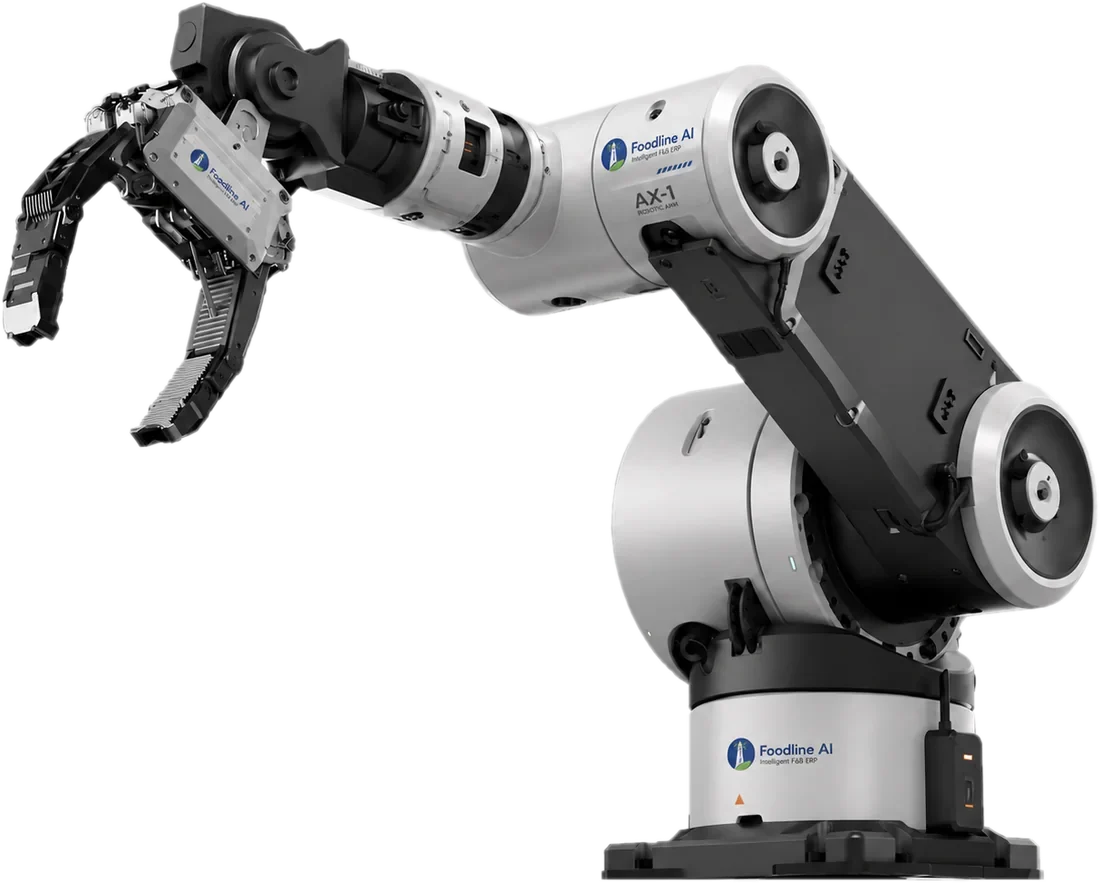 It needs a queueIt needs a pick instructionA person handles exceptions
Three things changed at once.
People have promised warehouse robots since the nineteen-eighties. The reason it keeps almost happening, and the reason this decade is different, comes down to three curves crossing.
Sensing got cheap
Cameras, depth sensors and force sensing cost a fraction of what they did ten years ago. The parts bin stopped being the bottleneck.
Models got good enough to act
Software went from describing a scene to deciding what to do about it. That is the line between a demo and a machine that earns its keep.
The work stopped getting easier to staff
Selectors, drivers and receivers are harder to hire and harder to keep, in exactly the rooms where the work never stops.
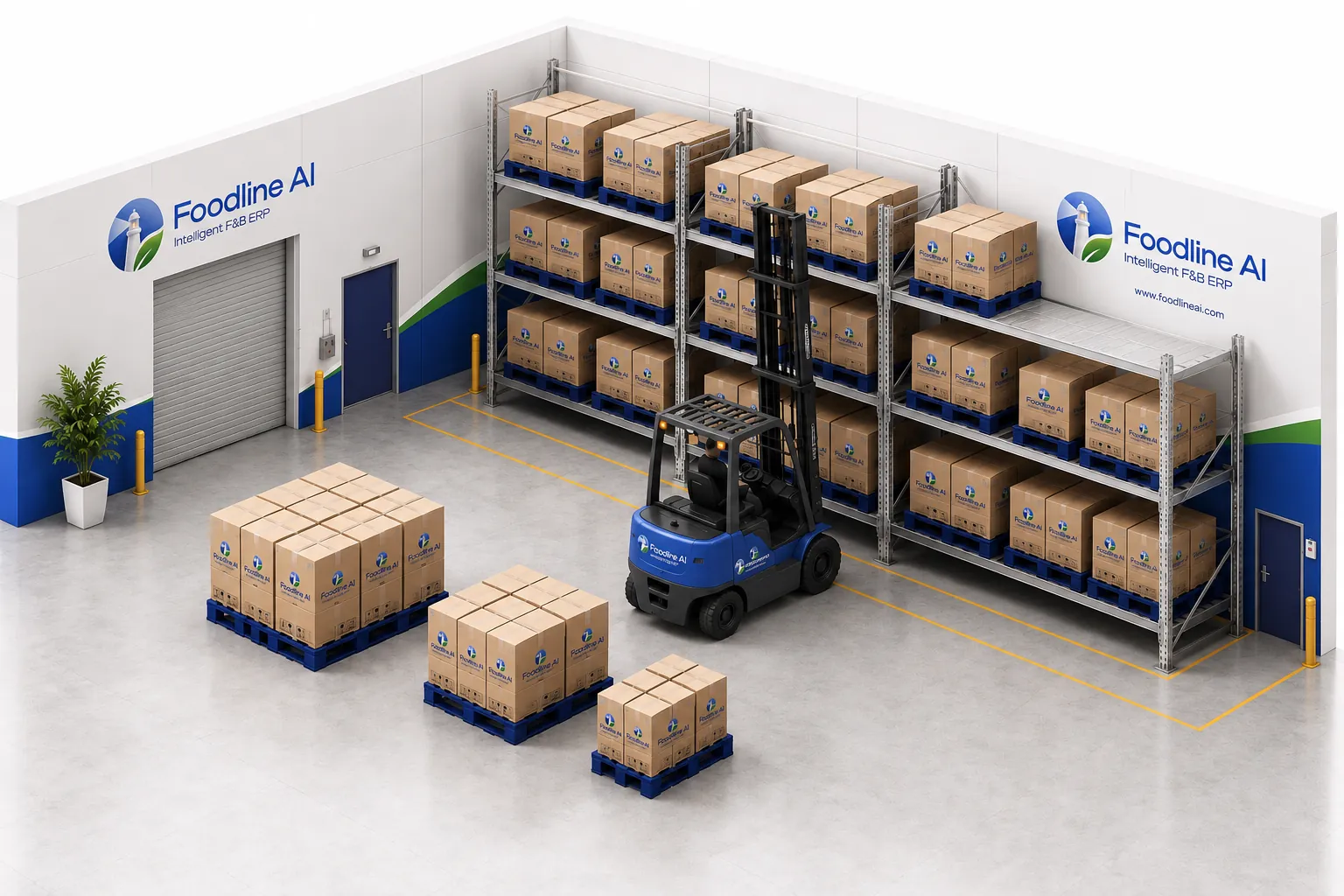
Software is judged on the floor, not in the demo.
A module is only worth having if it survives a wet floor, a handheld scanner, a driver who is late, and a pallet that does not match its paperwork. Everything here was built against a working warehouse first and written up second.
- Scanner-first receivingScans validated before the pallet is accepted
- FEFO wave pickingExpiry-first, straight through to route load
- Catch weightsOrdered, shipped and invoiced tracked apart
How robotics actually works.
You do not need an engineering background for this. Every robotic system, from a warehouse picker to a self-driving car, is built out of the same three moving parts. Once you see them, the rest is detail.
The operating system, the brain
Something has to think before anything can move.
Every robot runs software that manages everything underneath it: motors, cameras, sensors, timing. It takes in raw data, what the robot sees, where it is, whether anything is in the way, and decides what happens next. A nervous system and a decision-maker in one.
Foodline AI starts with the same idea: businesses do not need another point solution bolted onto the stack. They need one central system that can understand the work, prepare the next step, and keep people in control. We built it for businesses first. The architecture is the same.
It connects to tools, the hands
A brain on its own does nothing.
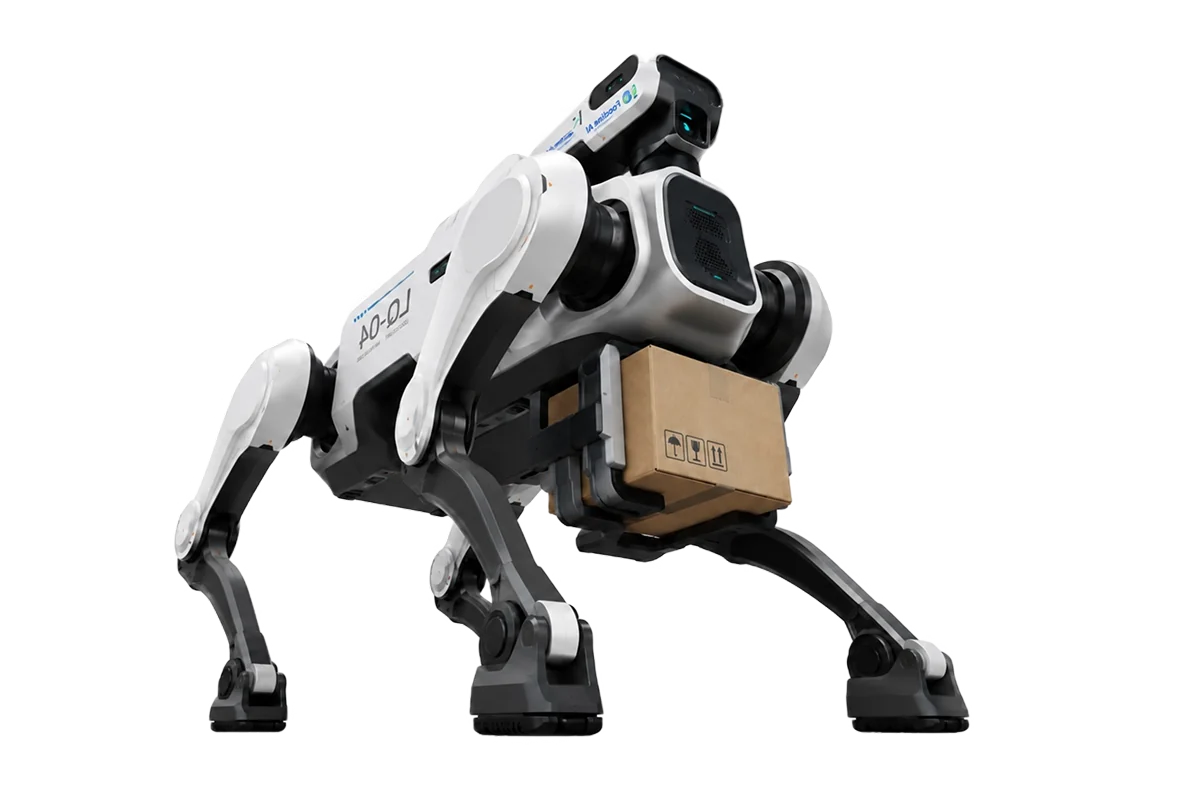
The brain has to plug into the physical world: grippers, conveyor belts, shelving, and whatever systems already exist on site. This is where a digital decision, pick up the item at bin 12, becomes a real physical action.
Most AI products are built in a vacuum and pitched before they touch a real operation. We did it backwards. Foodline AI was built against the demands of a live food distribution business. Real inventory, real warehouse workflows, real friction. A system that only works in a pitch deck is not a system, it is a prop.
It learns from data, and gets better
The part everybody misses.
Every task generates data: did it grab the item cleanly, did it take the fastest path, did it bump into something. That data feeds back into the brain, so the decision-making keeps improving. This is what turns a robot from something that does one fixed task into something measurably better at its job every week.
Foodline AI will not stay static. As the learning loop ships, every workflow and every edge case will feed back in: what to automate, what breaks, what a business actually needs versus what it says it needs. Learn, apply, get sharper, repeat. That loop is exactly what the next wave of robotics runs on.
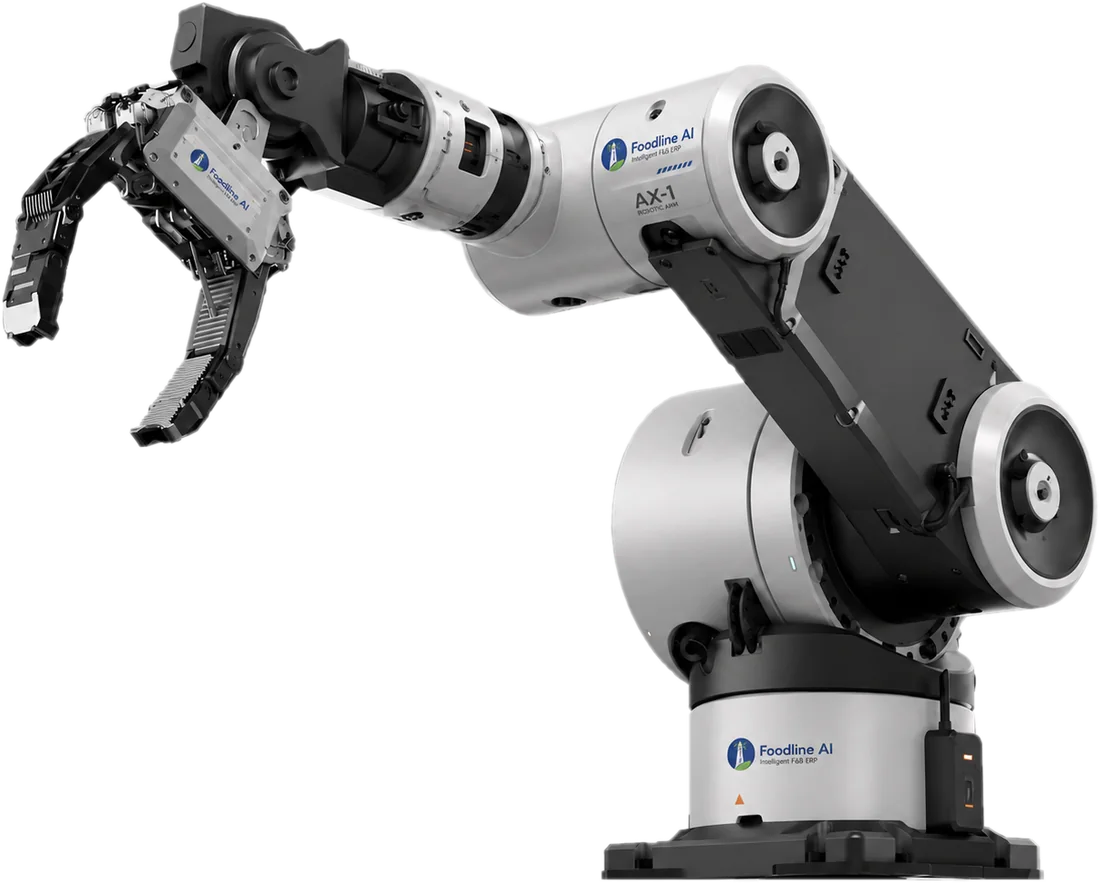
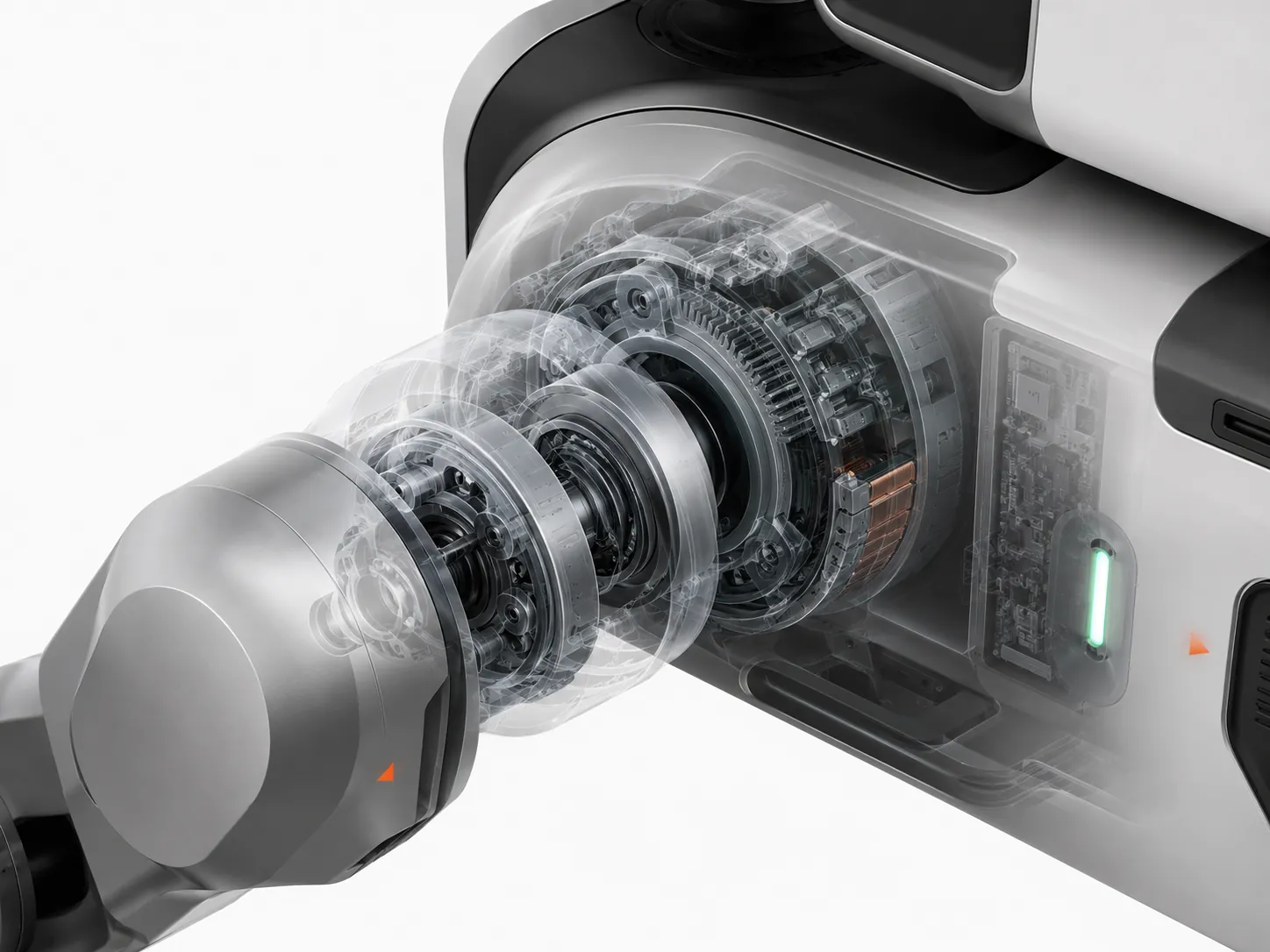
Where a decision becomes movement.
Take the shell off any machine like this and the first two parts of the blueprint meet in one housing about the size of a coffee cup: a motor, a reduction stage, a controller, and software deciding a thousand times a second how hard to push. The mechanical half of that is a solved industry. The deciding half is not.
- The muscleEngineering. Many companies are good at it
- The reflexClosed loop on position and force
- The judgementWhat should happen next, and why
A warehouse and a robot run the identical loop.
Sense what is happening. Decide what should happen next. Act. Learn from what happened, and feed that back into the sensing. Change the hardware and the words change; the loop does not. The blue line is running in a real distribution business today, except the learn step, which we are building now. The gold line is the same step on a machine.
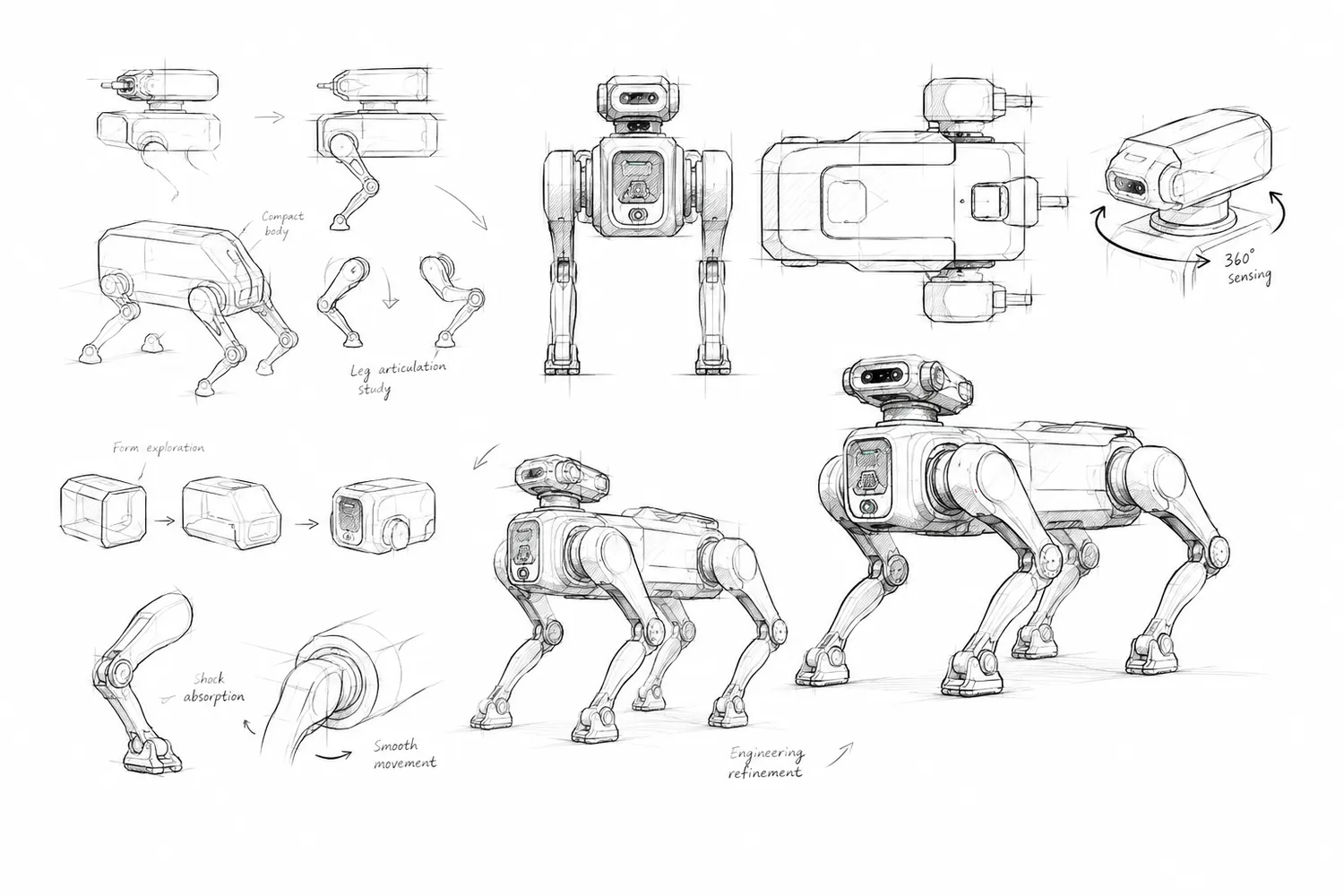
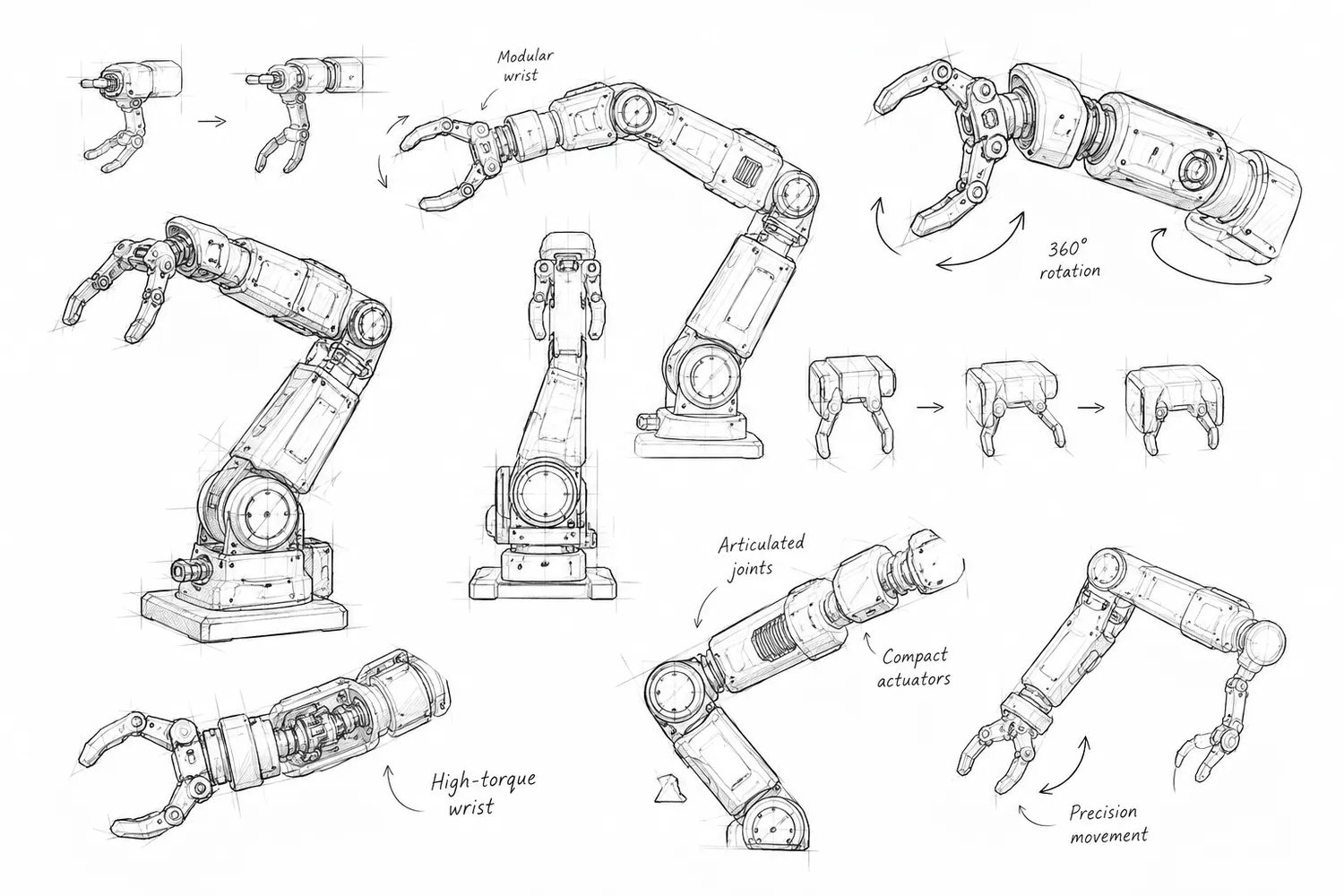
✦Look at concept sketches from any robotics lab, and you will find the same three parts drawn over and over. The shapes are converging. What is not converging is what the machines are supposed to know.
An operating system, laid brick by brick.
You cannot start at the top. Every layer below has to hold weight before the next one goes on, and each one has to survive contact with a real business first. Here is the stack as it stands, honestly: what is live today, what we are building right now, and the direction all of it points.
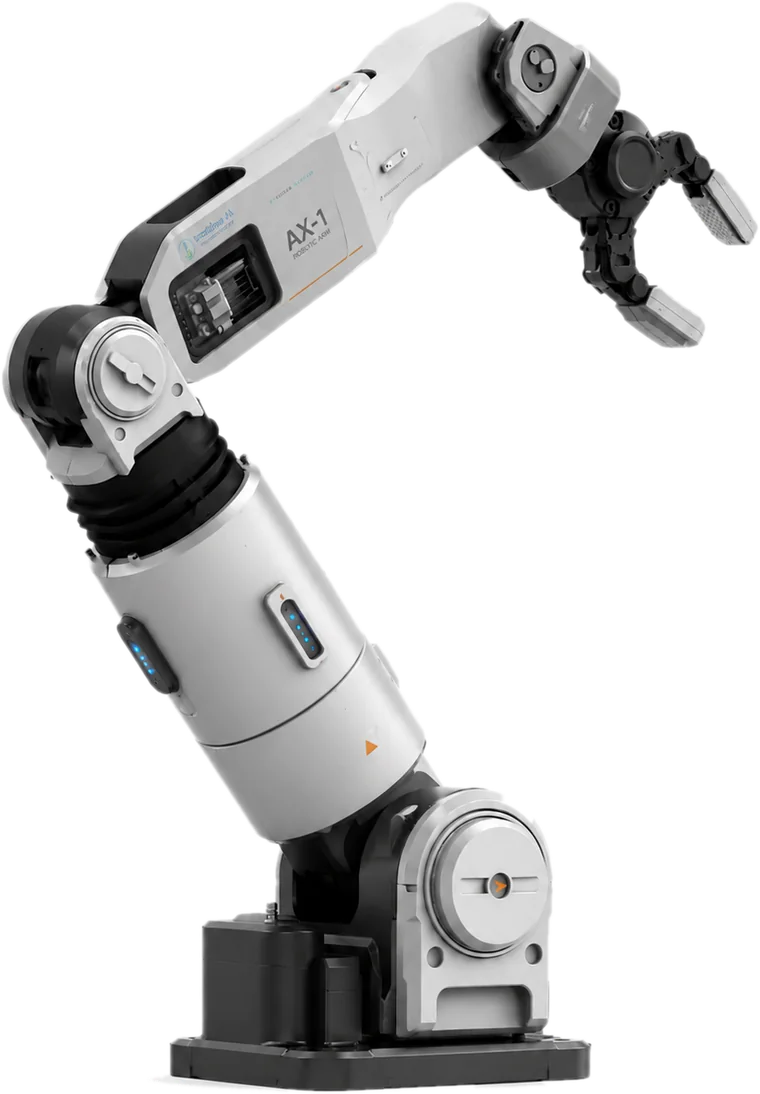
Whoever builds it will need answers we already have.
Picture an arm at the end of a pack line, whoever ends up making it. Before it moves, something has to tell it which case, for which customer, at which margin, by when, and whether that lot is the one that expires first. Those are not robotics questions. They are the questions Foodline AI answers for a human selector today, every day, in a live distribution business.
We are not announcing hardware. We are pointing at the layer underneath it.
Simulate the world, then let the machine act in it.
Physical AI means simulating a real environment accurately enough that software can learn to operate inside it, then handing that trained intelligence to hardware in the real world. Digital twins, agentic execution, a feedback loop. It is the direction the whole industry is heading, and it is the direction Foodline AI was built for.
Industry video about physical AI and simulation. Not Foodline AI footage or a Foodline AI product.
Software is easy to copy. Proof is not.
Anyone can put a chat box on top of a database and call it AI. What is hard is an operating system that has already been proven against a real operation, with real inventory, real money and real consequences when it gets something wrong.
As the learning loop ships, every distribution business Foodline AI supports will make the system sharper. That compounding is not something a competitor can buy, and it is the same compounding whoever builds the machines will need to rent from somebody.
Frequently asked questions
What is physical AI in food distribution?
Physical AI is software that senses what is happening, decides what should happen next, acts in the physical world and learns from the result. In food distribution, that means machines that pick, move and load cases, guided by live lots, expiry dates, orders and routes. Foodline AI runs the sense, decide and act steps of that loop for a distribution business today, in software; the learning loop is being built now.
What is a robotics-ready ERP?
An ERP that already holds the decisions a machine needs before it moves: which lot ships first under FEFO, which customer, route and stop the case belongs to, how many units the order line calls for, including shorts and substitutions, and whether a person must approve. Foodline AI answers those questions for human selectors today. Driving grippers, conveyors and other hardware is the next layer and is not live.
Does Foodline AI make robots?
No. Foodline AI builds the software layer a robot would depend on: the live operational record, the autonomous ERP core, 60+ ERP modules on one login, routines that run on their own and a human approval gate. Those layers are live today. Foodline AI is not announcing hardware.
What part of this is live today?
Live today: one live record of every item, lot, order, truck, customer and invoice; the autonomous ERP core; 60+ ERP modules on one login; routines that run overnight; and the human gate, so nothing that moves money or stock goes out without a person clicking yes. Being built now: the learning loop. Next: physical execution, the same core driving grippers, conveyors and autonomous hardware.
What does a warehouse robot need to know from the ERP?
Which case to pick, which lot expires first, which customer, route and delivery window it is for, how many units the order line calls for, and whether the move is allowed. Those are not robotics questions; they are the questions Foodline AI answers for a human selector today, every day, in a live distribution business.
Why is physical AI arriving in food distribution now?
Three things changed at once: cameras, depth and force sensors got cheap; AI models got good enough to decide what to do, not just describe a scene; and selectors, drivers and receivers got harder to hire and keep. A machine is still only as useful as the decision behind it, which is why the data and decision layer comes first.
The wave is coming. The layer under it is already running.
The ERP is live today, in a real distribution business. That is the part worth seeing, and it is the part everything else depends on.
Book a walkthroughCheck your warehouse against the physical AI readiness checklist →Get your data ready for AI and robotics →